On Friday, August 18, 1876, page four of the Charlotte Observer reported that “The house of Mr. Smith Alexander, in Sharon Township, was entered last Tuesday while the family were absent attending a picnic, and robbed of clothing, meat, flour and everything that could be conveniently carried away.”
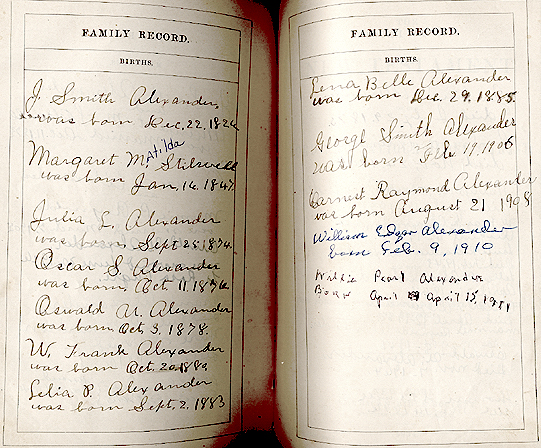
Mr. (John) Smith Alexander was 50 years old, and had been married for almost three years to Maggie Stilwell, age 29. They had lost their first child, Julia, the previous year, and in less than two months, Maggie would give birth to their second child, Oscar.
Other articles on the same page of the newspaper give some clues as to what life was like in 1876, as well as what type of picnic they might have been attending. A picnic promoting Temperance, or abstinence from drinking alcohol, was advertised. Temperance was a hot topic in the 1800’s, especially with women whose husbands overindulged and wasted the family’s livelihood and sometimes, became violent when under the influence.
Pills to remedy drinking too much were advertised, as well as a remedy for Dyspepsia, which apparently included all gastrointestinal complaints. Many ads for patent medicines listed the common illnesses of the time, including tuberculosis, whooping cough, and dysentery.
Several other articles were about picnics and rallies for the political candidates of the period. Zebulon Vance was running for State Governor, again, after serving during the Civil War and spending some time after the war under arrest. The lyrics for a campaign song for Vance were printed on the page, so it would seem that the Observer promoted his candidacy. The Sharon and Steel Creek communities were both mentioned as sites of political rallies.
The articles included many racist remarks. The Reconstruction period that followed the Civil War lasted until about 1876. The Democratic Party was the more conservative of the two main political parties. The Republican party had been the party of President Lincoln. One article remarked that the Republicans called the newspaper Democratic.
The hard times that followed the war were mentioned. Financial news and grocery ads indicated that bacon, corn, lard, flour, chickens, eggs, butter, honey, and sugar were important items in the diet of the times, and some foods, such as chickens, eggs, and butter, were scarce. Also mentioned were prices for cheese, rice, meal, grits, molasses, coffee, tea, fish, oats, peas, fruits, and potatoes, as well as wines and liquors.
Ads in the “Ten cent column” cost ten cents per line, minimum twenty-five cents, and included ads for Miss Mary Watson’s school, a gold mine for sale in Huntersville, food, medicine, employment, hotels, and Mason jars.
The robbers were arrested and charged, but the article didn’t mention whether any of the stolen goods were recovered. It seems significant that food was prominent in the list of things taken. For many citizens of North Carolina, the period after the war was a hungry time.
Smith and Maggie would eventually have a total of five children, one of whom was my grandfather, William Franklin Alexander, who was born in 1880. When their children were teenagers, the couple moved to a home on the Deep River in Moore County, N. C., where Smith passed away in 1904, and Maggie, later in 1931.
Sources: The Charlotte Observer, Charlotte, North Carolina, Friday, August 18, 1876, p. 4, accessed online; “Zebulon Vance,” https://historicsites.nc.gov/all-sites/zebulon-b-vance-birthplace/history/zebulon-vance, accessed 16 Sept. 2024.

 8 N. C. Families